Showing posts with label Video. Show all posts

Monday, October 15, 2012

Phrasal verbs and collocations with "get"


Here you can find some activities to show your students the importance of the verb "get" in English. They will see that it can have different meanings as it can appear both in phrasal verbs and collocations.


1. Tell your students to watch this video on the different collocations with the verb "get". They should write a list with all the collocations they hear.


2. Tell your students to read this website, where they can find some phrasal verbs with "get".
Click here

Then they can do the following exercises:
Exercise 1
Exercise 2
Exercise 3


3. To conclude, tell them to listen to the song "Fast car" by Tracy Chapman. You could prepare a fill in exercise with the lyrics.


Wednesday, April 18, 2012

LIFE IS TOO SHORT

An inspirational video to work on , maybe as a warmer


Sunday, April 1, 2012

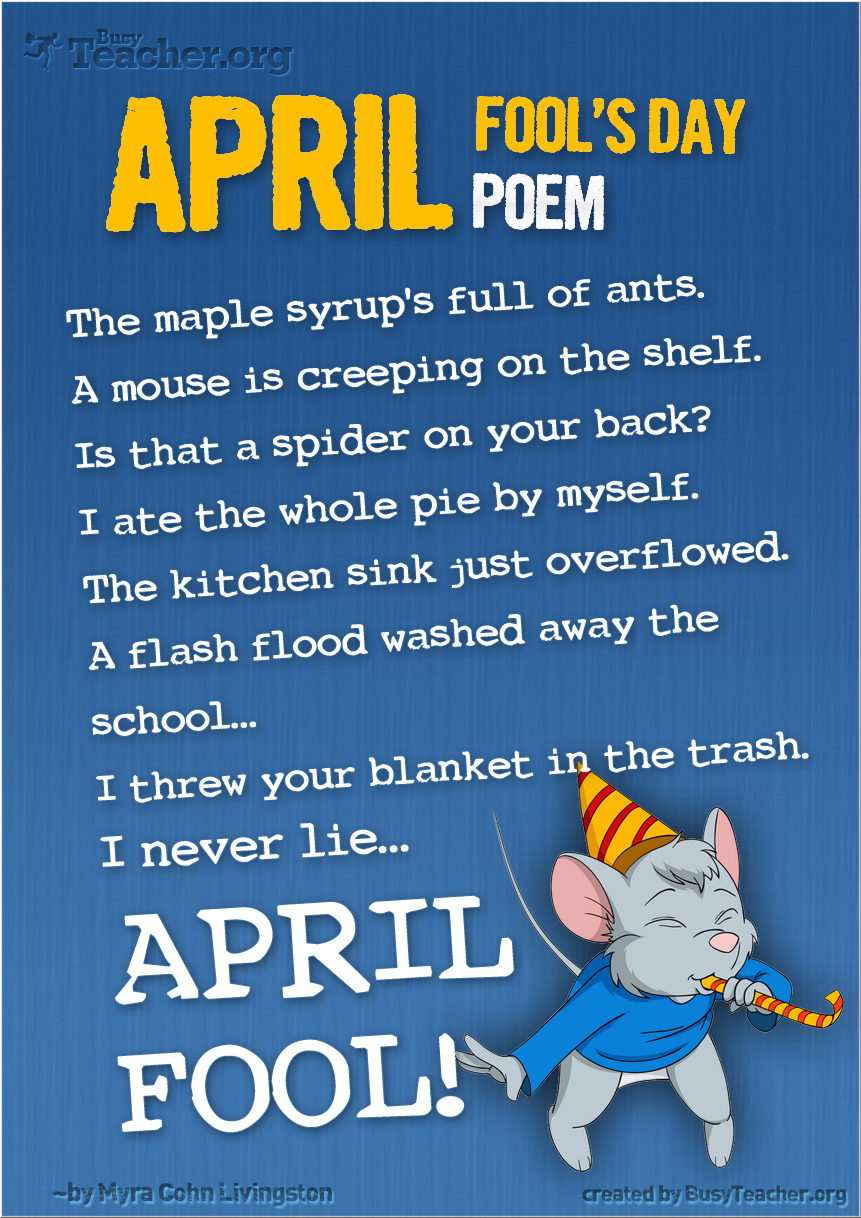
April fools (2)


A VIDEO AND 
 SOME ACTIVITIES.

and  A POEM  


Here's a lovely poem by Myra Cohn Livingston  turned into a hi-res poster -  just in time for the April Fool's Day!
Simply print it out and it's guaranteed to keep your learners smiling for.. well... at least a few minutes, that's for sure! 

                                                             BACKGROUND INFORMATION

 and a crossword

April's fools : BBC Making penguins fly


This video shows penguins flying. To start with the teacher can ask students what they know about penguins.
Then s/he shows the video and lets them comment on it. It could be a brief class discussion which is followed by the making of hypothesis on what happened(groups: 3/4). The students are then shown the second video (mute version) but this time some will face the video and others will just look at (turning their backs to the video) and listen to their classmates describing what happened. The new groups will write down their conclusions and then will listen and watch the video alltogether. What was it?Why did they do it?

.

Saturday, March 17, 2012

Describing people


An activity which combines listening and work on vocabulary to increase our students' knowlege of the vocabulary related to descriptions. Will we be able to get rid of the over-used nice and beautiful or bad and ugly?
Find the whole activity here.

Tuesday, March 13, 2012


Deep ocean mysteries and wonders

 (for Biology students, maybe?)


In the deepest, darkest parts of the oceans are ecosystems with more diversity than a tropical rainforest. Taking us on a voyage into the ocean -- from the deepest trenches to the remains of Titanic -- marine biologist David Gallo explores the wonder and beauty of marine life. Find more TED-Ed videos on our new YouTube channel: youtube.com/TEDEd.
Find the video here

Monday, March 12, 2012

Questions no one knows the answers to
In a TED-Ed series designed to catalyze curiosity, TED Curator Chris Anderson shares his obsession with questions that no one (yet) knows the answers to. This introduction leads into two questions as follow-up films: Why can't we see evidence of alien life? and How many universes are there?


Candem Market

From Word on the Street, A BBC-British Council language teaching programme. Each half-hour episode is filmed in a different place in the UK and presents lively aspects of young British culture.
Learn about Cadem Market, and access the worksheets and videos here.

Misery Bear - Trip to London

Misery Bear is a comedy character. He is a teddy bear without many friends and whose adventures seem to end in some sort of disaster. As Easter is approaching and we are thinking of travelling, it may be wise to see what happened to Misery Bear when he went to London as a sort of warning.
We can begin the lesson by talking about London: Where is it in the UK?, population, main highlights for tourists, what to do there, typical food...
Then we can introduce Misery Bear and try to predict what can happen when he goes to London before watching the actual video:
We can then summarise what happened in the story, point out the main monuments, talk about common words related to travelling... The teacher can also introduce new items of vocabulary with sentences such as: "if Misery Bear has an accident with a double-decker, what do you think a double-decker is? Why is it called like that?"

Managing stress

This is a funny video on the history of stress. It explains what the primary purpose of stress was in ancient times and deals with the main causes of stress today. It would be wonderful to show this video to your students during the finals as it gives them some clues to manage stress.


Thursday, March 8, 2012

Talking about free time


A video activity by the British Council : A night out

UGANDA:  RAPED AND KIDNAPPED CHILDREN..


KONY 2012 is a film and campaign by Invisible Children that aims to make Joseph Kony famous, not to celebrate him, but to raise support for his arrest and set a precedent for international justice.


A video to work with.....

and a reading activity from NPR

Monday, March 5, 2012

10 Questions for Emma Watson

This is an interview to British actress Emma Watson, Daniel Radcliffe's co-star in Harry Potter. She is a famous celebrity among teenagers, so this interview is quite appropriate for high school students.


Teachers can show students the video and tell them to answer the following questions:

1.       How many questions did the magazine Time receive?
2.       What’s the meaning of the expression ‘new do’?
3.       Why did she cut her hair?
4.       Why does she say she wants to be a Renaissance woman?
5.       What was the last day of filming like?
6.       If she could run away from all the bother of being a celebrity, where would she go?
7.       What is she studying in Brown?
8.       What does she think it would have happened if she had not continued filming Harry Potter?
9.       What role would she like to play?